Extracellular Vesicles Could Be Personalized Drug Delivery Vehicles
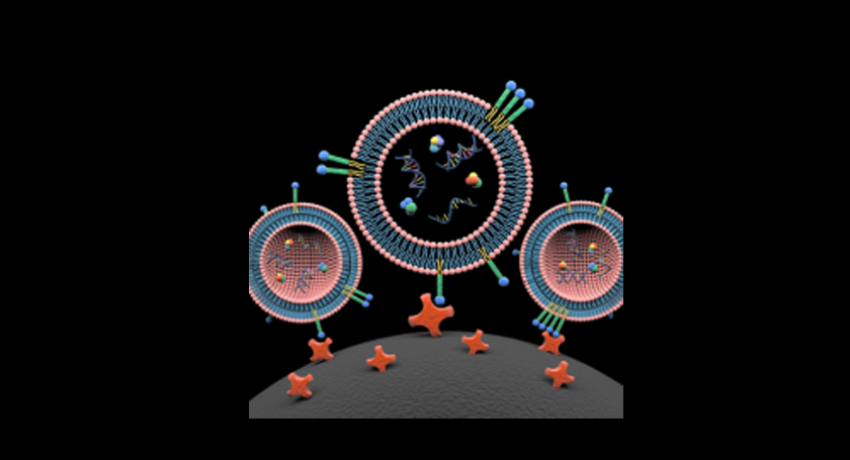
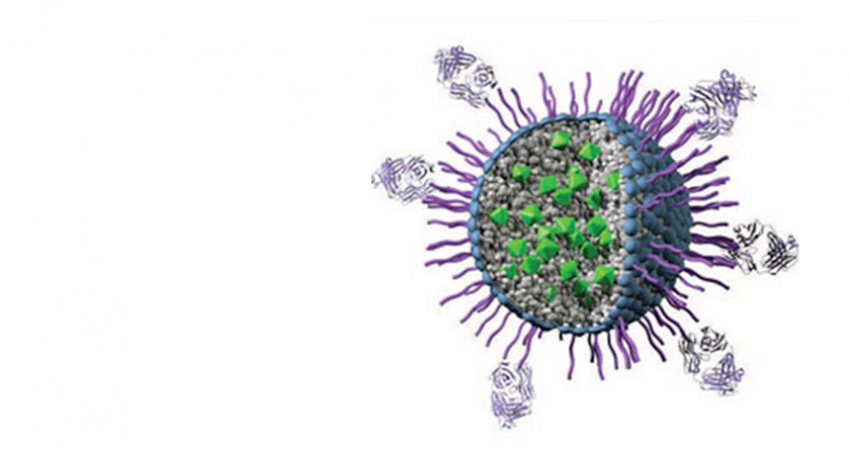
An international team of researchers used their own mouse autologous immune cells to create large amounts of fillable nanovesicles to deliver drugs to tumors in mice.
An international team of researchers has developed a new family of glass based on metals and organic compounds that stacks up to the original silica in glass-forming ability.
Development of a theoretical basis for ultrahigh piezoelectricity in ferroelectric materials led to a new material with twice the piezo response of any existing commercial ferroelectric ceramics, according to an international team of researchers.
A slippery rough surface (SRS) inspired by both pitcher plants and rice leaves outperforms state-of-the-art liquid-repellent surfaces in water harvesting applications, according to a team of researchers.
A precise chemical-free method for etching nanoscale features on silicon wafers has been developed by a team from Penn State and Southwest Jiaotong University and Tsinghua University in China.
A team of chemists at Penn State has developed a designer’s toolkit that lets them build various levels of complexity into nanoparticles using a simple, mix-and-match process.
A new cover article appearing in the high-impact scientific journal Chemical Society Reviews.
A piezoelectric ceramic foam supported by a flexible polymer support provides a 10-fold increase in the ability to harvest mechanical and thermal energy over standard piezo composites.
Forty-four graduate students competed for prizes in the PPG Elevator Pitch Competition held May 22, 2018 in the Millennium Science Complex.
Diseased cells such as metastatic cancer cells have markedly different mechanical properties that can be used to improve targeted drug uptake, according to a team of researchers at Penn State.