Penn State Materials Research Institute

  • intranetMRI Intranet
    contactusContact Us
  • Home
  • About MRI
      1. 2025-2030 Strategic Plan Executive Summary
      2. Personnel Directory
      3. Safety
      4. Opportunities + Awards
      5. Intellectual Property
      6. Academics
      7. Organization
      8. Millennium Science Complex
      9. History
      10. Staff Advisory Committee
  • Our Research
      1. Research Themes
      2. Research Centers
  • Core Research Facilities
      1. Materials Characterization Lab
      2. Nanofabrication Lab
      3. 2D Crystal Consortium
  • Access to Facilities
      1. Getting Started
      2. User Rates
      3. Requirements for Penn State Users
      4. Requirements for Non-Penn State Users
  • For Industry
      1. Visiting Industry Representative (VIR) Program
  • News
      1. eMaterials Newsletter
      2. News
      3. Focus on Materials
      4. Videos
      5. Lab Spotlight Series
      6. Pioneers of Materials Gallery
  • Events
      1. Millennium Café
      2. Millennium Microscopy Lectures
      3. 2DCC-MIP Webinars
      4. 2026 IWATMD
      5. Past Events at MRI


MRI

International Collaboration Powers Quest For Next-Generation Solar Cells

The next generation of solar cells, made from flexible, wearable material, may soon charge our devices on the go, or provide critical electricity when other power sources are not available, like during a natural disaster.

  • Read more about International Collaboration Powers Quest For Next-Generation Solar Cells

Killing Corona Virus With UV Light

A personal, handheld device emitting high intensity ultraviolet light to disinfect areas by killing the Corona virus is now feasible.

  • Read more about Killing Corona Virus With UV Light

Online Science Outreach Helps Fill A Void During COVID-19 Quarantine

Penn State’s Center for Nanoscale Science releases a new website full of family-friendly, at-home science experiments

  • Read more about Online Science Outreach Helps Fill A Void During COVID-19 Quarantine

A Simple Device To Monitor Health Using Sweat

A device to monitor health conditions in the body using a person’s sweat has been developed by researchers at Penn State and Xiangtan University.

  • Read more about A Simple Device To Monitor Health Using Sweat

An Understanding Of Relaxor Ferroelectric Properties Could Lead To Advances In Multiple Fields

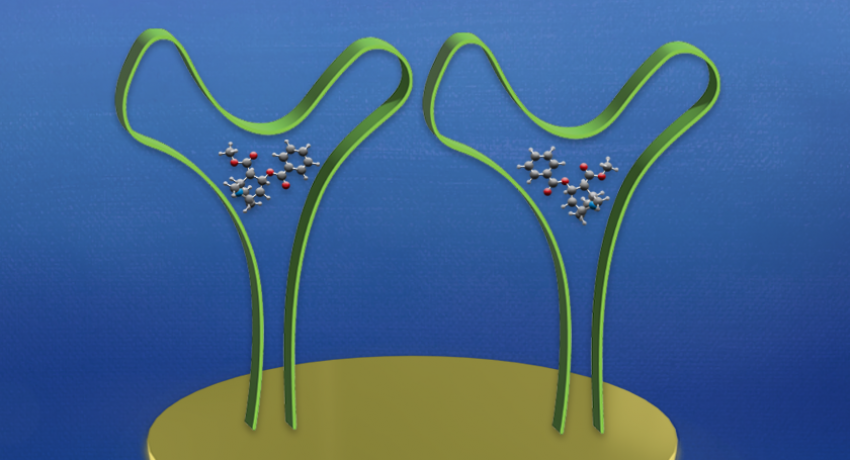
3D image depicting chirality with molecules

A new fundamental understanding of the behavior of polymeric relaxor ferroelectrics could lead to advances in flexible electronics, actuators and transducers, energy storage, piezoelectric sensors and electrocaloric cooling.

  • Read more about An Understanding Of Relaxor Ferroelectric Properties Could Lead To Advances In Multiple Fields

New Insights Into Van Der Waals Materials Found

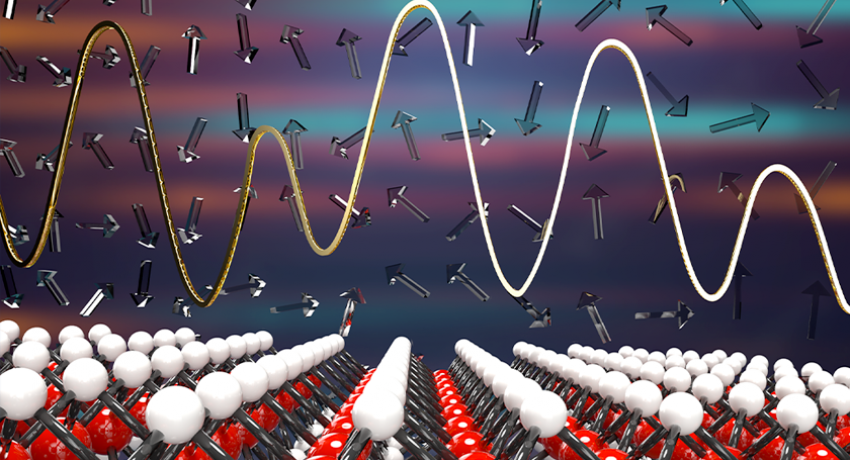
Illustration of the lattice dynamics

Layered van der Waals materials are of high interest for electronic and photonic applications, according to researchers at Penn State and SLAC National Accelerator Laboratory.

  • Read more about New Insights Into Van Der Waals Materials Found

Penn State Awarded An Energy Frontier Research Center Grant Worth Over $10 Million

The Department of Energy has awarded an Energy Frontier Research Center Award to Penn State.

  • Read more about Penn State Awarded An Energy Frontier Research Center Grant Worth Over $10 Million

New Advances In Superconductivity

The goal of room temperature superconductivity took a small step forward with a recent discovery by a team of Penn State physicists and materials scientists.

  • Read more about New Advances In Superconductivity

Penn State To Lead $30 Million University Research Alliance

The Department of Defense’s Defense Threat Reduction Agency (DTRA) has awarded a combined total of $51.1 million to two university research alliances.

  • Read more about Penn State To Lead $30 Million University Research Alliance

Highly Sensitive Dopamine Detector Uses 2D Materials

illustration of a highly sensitive dopamine detector

A supersensitive dopamine detector can help in the early diagnosis of several disorders that result in too much or too little dopamine, according to a group led by Penn State.

  • Read more about Highly Sensitive Dopamine Detector Uses 2D Materials

Pagination

  • First page « First
  • Previous page ‹ Previous
  • …
  • Page 58
  • Page 59
  • Page 60
  • Page 61
  • Current page 62
  • Page 63
  • Page 64
  • Page 65
  • Page 66
  • …
  • Next page Next ›
  • Last page Last »
Subscribe to MRI
    Follow Us:
  • linkedin
  • youtube
  • twitterX
  • instagram
Penn State
Materials Research Institute
© The Pennsylvania State University Materials Research Institute. All rights reserved.

Penn State is committed to ensuring that people with disabilities have an opportunity equal to that of their nondisabled peers to participate in the University's programs, benefits, and services, including those delivered through information and communications technology.

If you discover a web page or application that is not accessible or does not conform to the University’s Accessibility Policy (AD69), please contact our IT Accessibility Team by email at accessibility@psu.edu. Please describe the problem, including the web address or URL of the web page or application. You may also call the University Help Desk at 814-865-HELP (4357). For more details, read the Penn State Accessibility Statement.

Main Location

  • addressThe Materials Research Institute
    Millennium Science Complex
    491 Pollock Road
    University Park, PA 16802

Subscribe to MRI

It is FREE and easy!
Join our mailing list

Subscribe Here

LEO Cores Login/Registration

LEO Cores Login and Registration

About MRI

  • aboutusAbout the Institute
  • ipIntellectual Property
  • academicsAcademics
  • orgOrganization
  • mscMillennium Science Complex
  • historyHistory

For MRI Staff

  • msacStaff Advisory Committee

MRI Intranet

  • intranetIntranet

Acknowledgment & Authorship Guidelines

  • acknowledgementsGuidelines for the Penn State Office of the Senior Vice President for Research Core Research Facilities
Copyright © The Pennsylvania State University | Materials Research Institute. All rights reserved.

The 2DCC-MIP is funded by NSF cooperative agreement DMR-2039351.

MRI is not responsible for the content of external sites. Registration may be required for some sites.

General inquiries: mri-info@psu.edu | Website inquiries: mri-web@psu.edu

Copyright © The Pennsylvania State University | Materials Research Institute. All rights reserved.
Top