MRI Funding Opportunities
New MRI Interdisciplinary Seed Grant Opportunity in Multiple Areas:
Funding 2026/2027
The Materials Research Institute (MRI) has identified a set of interdisciplinary research themes that meet our strategic goals and have the potential for impactful research and outreach. We invite the Penn State research community to propose high-risk, high-impact, and transformative ideas that: support faculty in building collaborations beyond their home units, particularly across institutes; enable early-career faculty to establish new research partnerships; generate preliminary data to strengthen external funding proposals; and catalyze the formation of new, interdisciplinary, large-team initiatives. There is particular interest in seeding collaborations between researchers affiliated with MRI and those in other interdisciplinary institutes across Penn State. Current topic areas are:
Topic 1. Convergence of Life Sciences, Bioengineering, Materials and Devices
This theme supports interdisciplinary research that integrates materials science, engineering, and the life sciences to address challenges in healthcare, biotechnology, bioinspiration, and the environment. Projects may span biomaterials, medical devices, bio-inspired and living materials, diagnostics, sensing, and sustainable bio-integrated systems, with emphasis on convergence, translation potential, and societal impact. Seed grants resulting from this theme may be supported by the Convergence Center for Living Multifunctional Material Systems in partnership with the Materials Research Institute.
Topic 2. Sustainable Materials and Processes Solutions for Future Industry
This area targets transformative materials and process innovations that reduce energy consumption, enable circularity, and minimize environmental impact across the materials lifecycle. Priority is given to interdisciplinary approaches addressing sustainable synthesis and processing, recycling of complex material systems, design for deconstruction, life-cycle and techno-economic analysis, and materials solutions for decarbonization and critical resource challenges. Seed grants resulting from this theme may be supported by the Convergence Center for Living Multifunctional Material Systems in partnership with the Materials Research Institute.
Topic 3. Materials for Extreme Environments
This theme focuses on the development of materials capable of operating reliably under harsh conditions, including extreme temperatures, radiation, corrosive environments, high pressures, and mechanical stresses. Research may address aerospace, nuclear, chemical, space, and energy applications, emphasizing durability, reliability, and performance limits under coupled extreme conditions.
Topic 4. Materials for Artificial Intelligence (AI), Packaging, and Power Electronics
This topic advances materials and integration strategies that enable next-generation electronics, power systems, and AI hardware. Areas of interest include wide- and ultra-wide-bandgap semiconductors, advanced packaging and heterogeneous integration, thermal management, high-performance dielectrics and magnetic materials, and materials solutions that support high power density, efficiency, and reliability.
Topic 5. Quantum Materials and Sensing
This theme supports discovery and integration of materials for quantum information science and sensing, leveraging strengths in synthesis, nanofabrication, characterization, and theory. Research may address qubit materials, coherence and defects, scalable fabrication, quantum interfaces, and materials-enabled sensing platforms with unprecedented sensitivity.
Topic 6. AI Assisted Materials Discovery, Prototyping and Manufacturing
This area focuses on the use of artificial intelligence and machine learning to accelerate materials discovery, processing, prototyping, and manufacturing. Projects may integrate data-driven design, physics-informed AI, intelligent manufacturing, in-situ sensing, digital twins, and cross-disciplinary partnerships to enable adaptive, efficient, and scalable materials development.
Seed Grant Eligibility
All Penn State faculty members (tenured/tenure track, and fixed term research faculty) who hold an appointment of half-time or more at any Penn State location are eligible to submit a seed grant proposal as a Principal Investigator (PI). Researchers, students and staff from Penn State may be included as co-PIs in seed grant proposals. Please note that while most proposals are expected to include multiple investigators, there can only be one responsible PI for each application. In addition, investigators may only serve as PI in a single proposal, and co-PI for a maximum of two proposals.
Access Infoready to apply:
The Rustum and Della Roy Innovation in Materials Research Awards recognize research at Penn State in four categories; Early-career Faculty Members, Non-Tenure Line Researcher, Post-Doctoral Scholar, and Graduate Student, which yields innovative and unexpected results in materials.
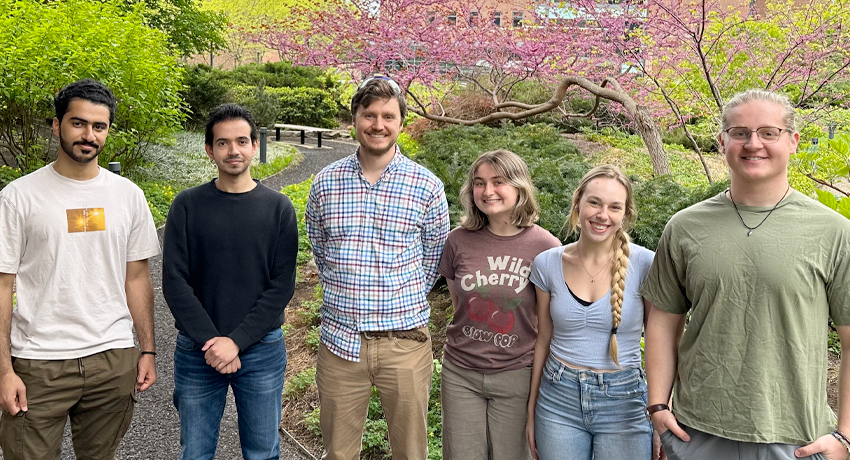
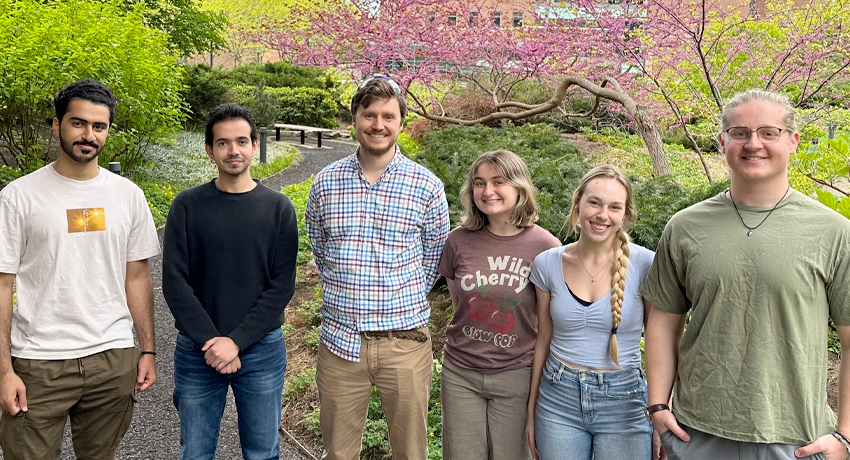
The Materials Research Institute (MRI) Undergraduate Fellowship provides students with an immersive hands-on laboratory experience in the state-of-the-art Millennium Science Complex. We are currently taking applications for this one-of-a-kind position that offers undergraduate students the kind of hands-on, real-world work experience that will propel your college career and prepare you for your future.