Penn State Materials Research Institute

  • intranetMRI Intranet
    contactusContact Us

    educationEducation and Training
  • Home
  • About MRI
      1. 2025-2030 Strategic Plan Executive Summary
      2. Personnel Directory
      3. Safety
      4. Opportunities + Awards
      5. Intellectual Property
      6. Academics
      7. Organization
      8. Millennium Science Complex
      9. History
      10. Staff Advisory Committee
  • Our Research
      1. Research Themes
      2. Research Centers
  • Core Research Facilities
      1. Materials Characterization Lab
      2. Nanofabrication Lab
      3. 2D Crystal Consortium
  • Access to Facilities
      1. Getting Started
      2. User Rates
      3. Requirements for Penn State Users
      4. Requirements for Non-Penn State Users
  • For Industry
      1. Visiting Industry Representative (VIR) Program
  • News
      1. eMaterials Newsletter
      2. News
      3. Focus on Materials
      4. Videos
      5. Lab Spotlight Series
      6. Pioneers of Materials Gallery
  • Events
      1. Materials Day 2026
      2. Millennium Café
      3. Millennium Microscopy Lectures
      4. 2DCC-MIP Webinars
      5. 2026 IWATMD
      6. Past Events at MRI


MRI

$1.25M Grant Lays Groundwork For Synthetic Tendon And Ligament Implants

Photo of man in lab coat working on an instrument

Torn ligaments and tendons are the bane of athletes and runners, difficult to heal and often taking months or years of rehab.

  • Read more about $1.25M Grant Lays Groundwork For Synthetic Tendon And Ligament Implants

Graphene Made With Lasers For Wearable Health Devices

Flexible graphene wrapped around human hand

Graphene, hexagonally arranged carbon atoms in a single layer with superior pliability and high conductivity, could advance flexible electronics.

  • Read more about Graphene Made With Lasers For Wearable Health Devices

A New Twist On 2D Materials May Lead To Improved Electronic, Optical Devices

side-by-side 2d scientific illustrations

A new generation of electronics and optoelectronics may soon be possible by controlling twist angles in a particular type of bilayer 2D material used in these devices, strengthening the intrinsic electric charge that exists between the two layers.

  • Read more about A New Twist On 2D Materials May Lead To Improved Electronic, Optical Devices

Monitoring Glucose Levels, No Needles Required

With a new wearable device created by Penn State researchers, less intrusive glucose monitoring could become the norm. 

  • Read more about Monitoring Glucose Levels, No Needles Required

Saliva-Based COVID-19 Test May Provide At-Home Results In 30 Minutes

Penn State electrical engineering professor Aida Ebrahimi receives NIH Trailblazer Award to develop a daily testing device

  • Read more about Saliva-Based COVID-19 Test May Provide At-Home Results In 30 Minutes

AI Behind Deepfakes May Power Materials Design Innovations, Scientists Say

AI model diagram

The person staring back from the computer screen may not actually exist, thanks to artificial intelligence (AI) capable of generating convincing but ultimately fake images of human faces.

  • Read more about AI Behind Deepfakes May Power Materials Design Innovations, Scientists Say

Going Gold: Engineers To Investigate Using Gold As Catalyst In Hydrogenation

Everyday items, like prescription drugs, gasoline and plastics, all undergo several rounds of catalytic processes during manufacturing.

  • Read more about Going Gold: Engineers To Investigate Using Gold As Catalyst In Hydrogenation

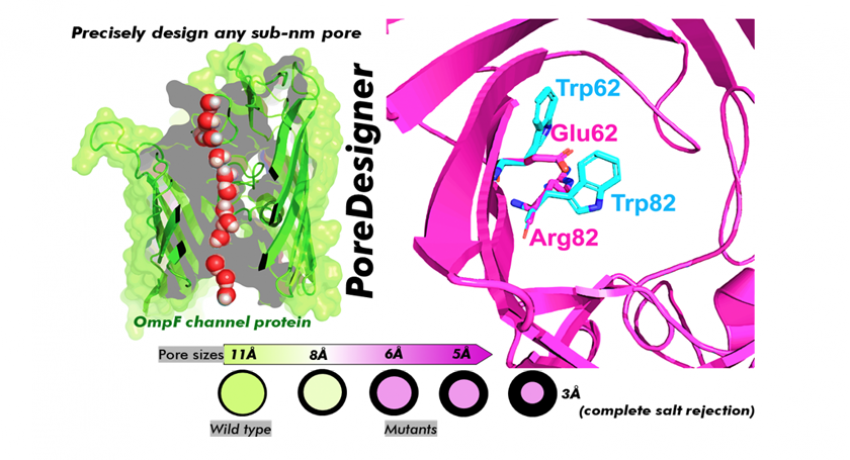
Key To Resilient Energy-Efficient AI/Machine Learning May Reside In Human Brain

A clearer understanding of how a type of brain cell known as astrocytes function and can be emulated in the physics of hardware devices may result in artificial intelligence (AI) and machine learning that autonomously self-repairs and consumes much less energy than the technologies currently do.

  • Read more about Key To Resilient Energy-Efficient AI/Machine Learning May Reside In Human Brain

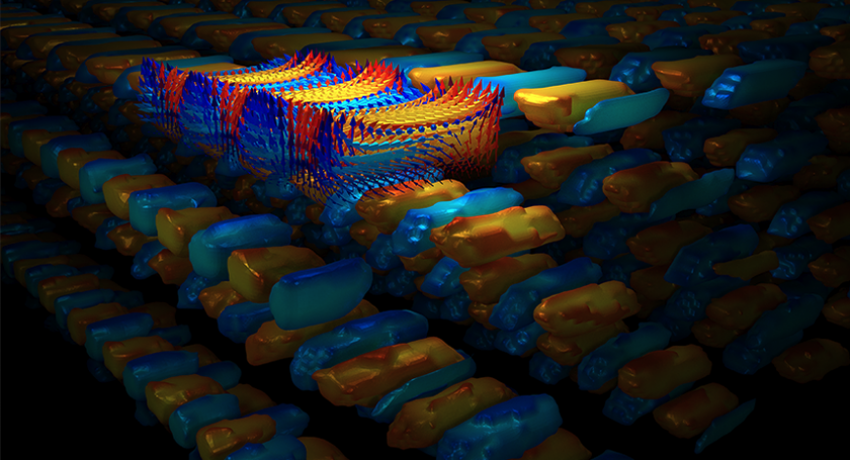
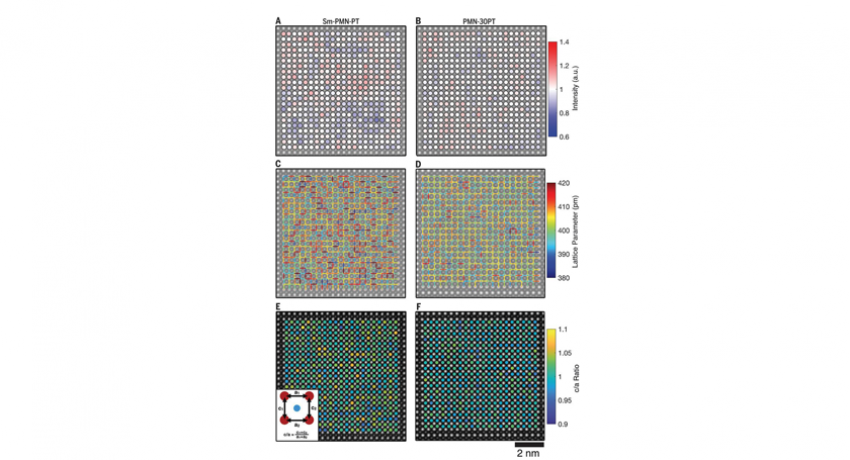
Study Challenges Standard Ideas About Piezoelectricity In Ferroelectric Crystals

For years, researchers believed that the smaller the domain size in a ferroelectric crystal, the greater the piezoelectric properties of the material. However, recent findings by Penn State researchers have raised questions about this standard rule.

For years, researchers believed that the smaller the domain size in a ferroelectric crystal, the greater the piezoelectric properties of the material. However, recent findings by Penn State researchers have raised questions about this standard rule.

  • Read more about Study Challenges Standard Ideas About Piezoelectricity In Ferroelectric Crystals

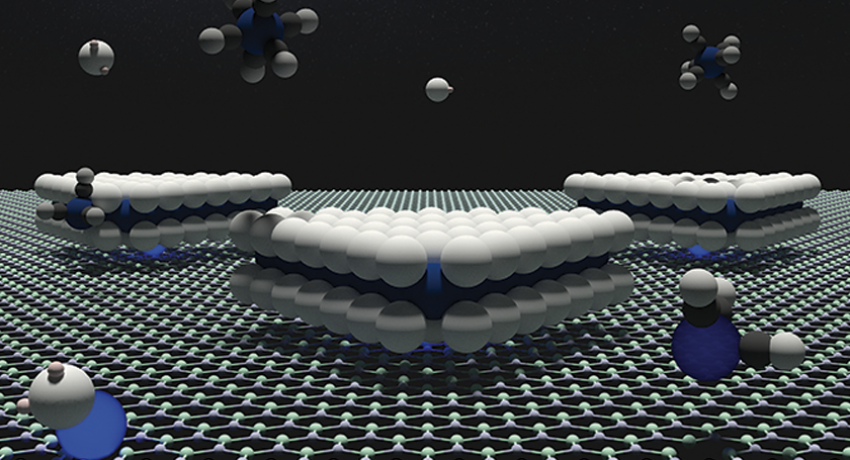
When A Defect Is A Good Thing

Defects in the lattice structure of hexagonal boron nitride can be detected with photoluminescence. Researchers shine a light with a color or energy on the material and get a different color from the defect. In addition, the figure shows hydrogen bubbles being generated from these defects that contain catalyst atoms (gray and dark spheres attached to the vacancies).

Tiny defects hold key to turning inert materials into more useful chemically active ones

  • Read more about When A Defect Is A Good Thing

Pagination

  • First page « First
  • Previous page ‹ Previous
  • …
  • Page 67
  • Page 68
  • Page 69
  • Page 70
  • Current page 71
  • Page 72
  • Page 73
  • Page 74
  • Page 75
  • …
  • Next page Next ›
  • Last page Last »
Subscribe to MRI
    Follow Us:
  • linkedin
  • youtube
  • twitterX
  • instagram
Penn State
Materials Research Institute
© The Pennsylvania State University Materials Research Institute. All rights reserved.

Penn State is committed to ensuring that people with disabilities have an opportunity equal to that of their nondisabled peers to participate in the University's programs, benefits, and services, including those delivered through information and communications technology.

If you discover a web page or application that is not accessible or does not conform to the University’s Accessibility Policy (AD69), please contact our IT Accessibility Team by email at accessibility@psu.edu. Please describe the problem, including the web address or URL of the web page or application. You may also call the University Help Desk at 814-865-HELP (4357). For more details, read the Penn State Accessibility Statement.

Main Location

  • addressThe Materials Research Institute
    Millennium Science Complex
    491 Pollock Road
    University Park, PA 16802

Subscribe to MRI

It is FREE and easy!
Join our mailing list

Subscribe Here

LEO Cores Login/Registration

LEO Cores Login and Registration

About MRI

  • aboutusAbout the Institute
  • ipIntellectual Property
  • academicsAcademics
  • orgOrganization
  • mscMillennium Science Complex
  • historyHistory

For MRI Staff

  • msacStaff Advisory Committee

MRI Intranet

  • intranetIntranet

Acknowledgment & Authorship Guidelines

  • acknowledgementsGuidelines for the Penn State Office of the Senior Vice President for Research Core Research Facilities
Copyright © The Pennsylvania State University | Materials Research Institute. All rights reserved.

The 2DCC-MIP is funded by NSF cooperative agreement DMR-2039351.

MRI is not responsible for the content of external sites. Registration may be required for some sites.

General inquiries: mri-info@psu.edu | Website inquiries: mri-web@psu.edu

Copyright © The Pennsylvania State University | Materials Research Institute. All rights reserved.
Top