Q&A: How can advanced chip packaging help redesign the future of semiconductors?

Microchips Image

Researchers explain how chip architecture and Penn State-led initiatives can help jump-start U.S. chip manufacturing

By Tim Schley

The phrase “advanced chip packaging” might conjure images of a fancy Pringles can. For those who manufacture semiconductors — also known as integrated circuits, chips or microchips — it represents a new frontier, a race to design and mass produce the next generation of semiconductors that use less energy while delivering more computing power.

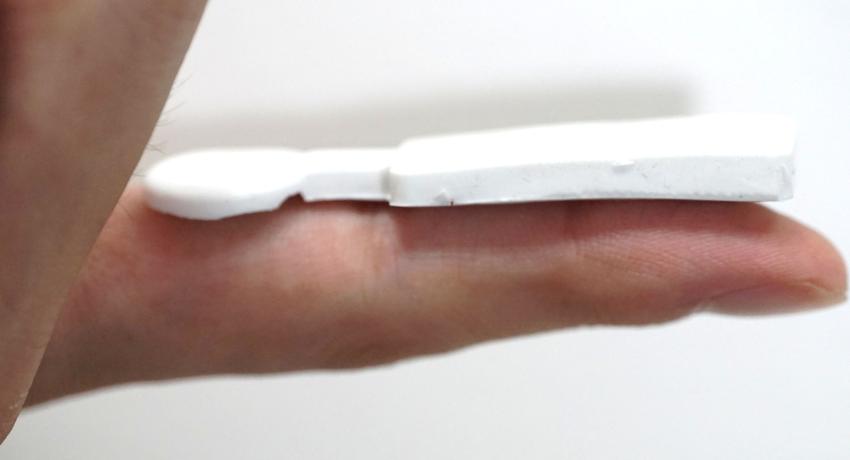
Cold sintering may rescue plastic, ceramics, battery components from landfills

Young woman looking at a battery coin cell in a lab

 Recycling does not necessarily prevent an item from eventually ending up in a landfill, according to Enrique Gomez, interim associate dean for equity and inclusion and professor of chemical engineering in the Penn State College of Engineering. Instead, recycling simply delays its end of life. Plastic bottles that are recycled and then turned into carpet, for example, eventually end up in the landfill when the carpet gets worn out and is thrown away.

Dipanjan Pan

Dipanjan Pan

Dorothy Foehr Huck & J. Lloyd Huck Chair Professor in Nanomedicine
Professor of Materials Science and Engineering, Professor of Nuclear Engineering

205 Hallowell Building

‘Surprising’ hidden activity of semiconductor material spotted by researchers

Prof. Gopalan in lab with students

By Jamie Oberdick

New research suggests that materials commonly overlooked in computer chip design actually play an important role in information processing, a discovery which could lead to faster and more efficient electronics. Using advanced imaging techniques, an international team led by Penn State researchers found that the material that a semiconductor chip device is built on, called the substrate, responds to changes in electricity much like the semiconductor on top of it.

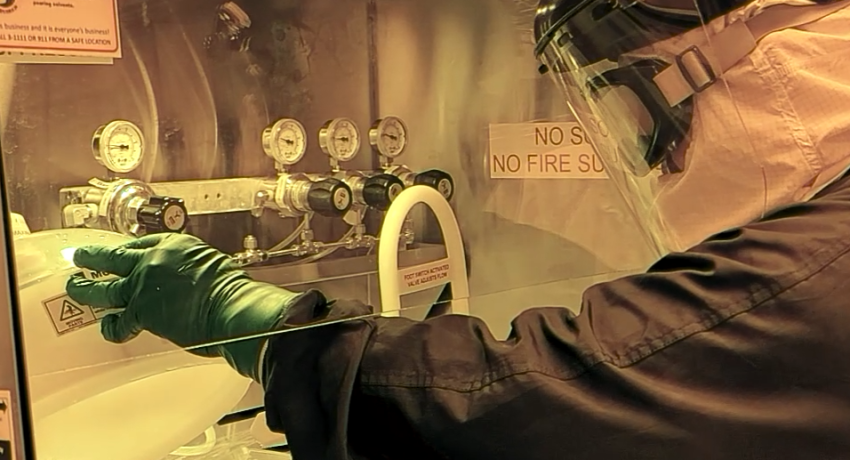
Silicon Carbide Innovation Alliance to drive industrial-scale semiconductor work

SCIA News Graphic

By Jamie Oberdick

Known for its ability to withstand extreme environments and high voltages, silicon carbide (SiC) is a semiconducting material made up of silicon and carbon atoms arranged into crystals that is increasingly becoming essential to modern technologies like electric vehicles, renewable energy systems, telecommunications infrastructure and microelectronics.