

Next-gen tech can detect disease biomarker in period blood

Proof-of-concept, at-home device can detect biomarker for endometriosis — a debilitating uterine disease — in 10 minutes; advancement makes early detection easier, more accessible, researchers say
By Ashley WennersHerron

Patrick Mather
Dean, Schreyer Honors College
Professor, Chemical Engineering and Materials Science and Engineering
https://sites.psu.edu/matherlab/

Maziar Montazerian
Assistant Research Professor
312 Steidle Building
University Park, PA 16802
(e) mbm6420@psu.edu
https://www.matse.psu.edu/directory/maziar-montazerian
https://scholar.google.com/citations?hl=en&user=wnAvYugAAAAJ
https://www.glassyage.com/

Gold clusters show promise as scalable options for quantum computers, sensors

By Gail McCormick
New study shows how gold nanoclusters mimic key properties of the most accurate systems currently used in quantum applications and can even be tuned to improve accuracy

Opening Doors to Discovery: Penn State’s MRI offers undergraduates hands-on Research opportunities

By Jamie Oberdick
At Penn State’s Materials Research Institute (MRI), undergraduate students are gaining invaluable hands-on experience in cutting-edge scientific research. Through a variety of programs, these students are not only advancing their academic knowledge but also accessing state-of-the-art research facilities, often for the first time.
Tools of Discovery: How new equipment is powering research breakthroughs at Penn State
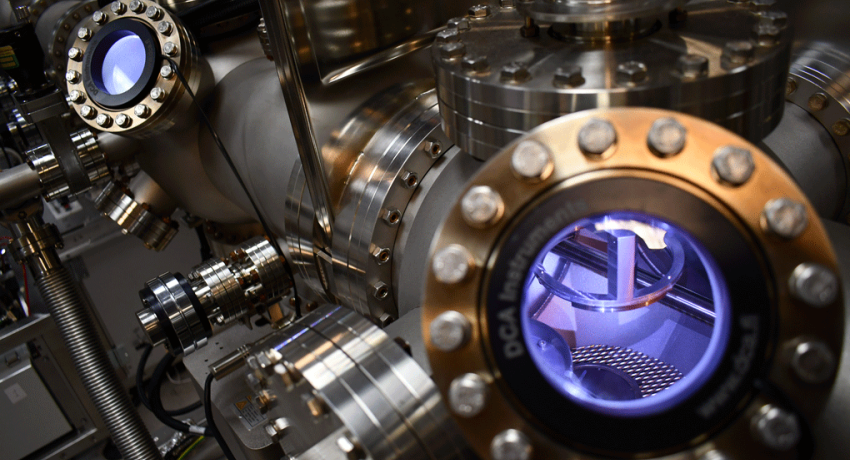
By Jamie Oberdick
From growing perfect crystals to testing materials in real-world conditions, Penn State’s advanced lab tools are making scientific breakthroughs possible
Great ideas and brilliant researchers are essential for discovery—but so is having the right equipment. At Penn State, scientists are pushing the boundaries of materials science thanks to new, state-of-the-art tools that let them explore questions they couldn’t answer before.
MRI powers optical network innovation through collaboration with Infinera/Nokia

By Jamie Oberdick
When optical networking company Infinera was acquired by telecommunications giant Nokia in early 2025, it was hailed as a strategic move that would solidify Nokia’s leadership in data transport technology. But behind this $2.3 billion deal lies a story of innovation that’s been quietly unfolding in central Pennsylvania, thanks to a long-standing partnership between Infinera and Penn State’s Materials Research Institute (MRI).