Researchers uncover mechanisms to easily dry, redisperse cellulose nanocrystals

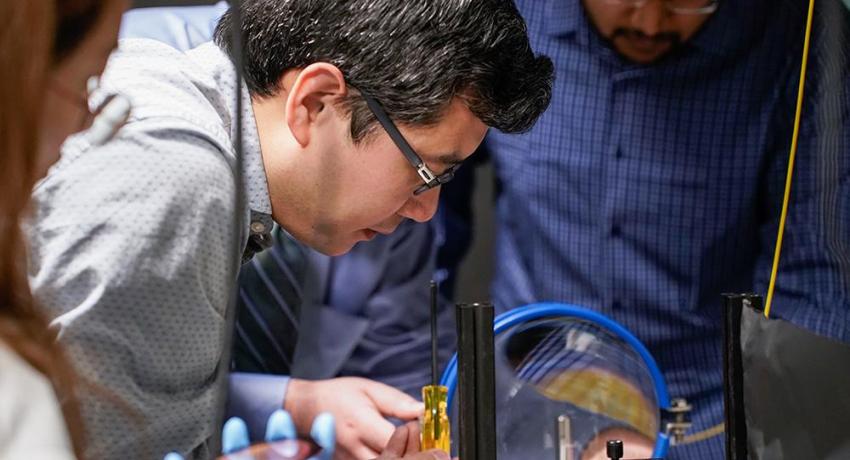
Man and two women in a lab readying a sample of cellulose

By Maria R. Lucas

UNIVERSITY PARK, Pa. — Cellulose nanocrystals — bio-based nanomaterials derived from natural resources such as plant cellulose — are valuable for their use in water treatment, packaging, tissue engineering, electronics, antibacterial coatings and much more. Though the materials provide a sustainable alternative to non-bio-based materials, transporting them in liquid taxes industrial infrastructures and leads to environmental impacts.

Unconventional experiments produce new nanoscale particles with big potential

By Sam Sholtis

Nanoparticles are complex materials smaller than 100 nanometers, or about the size of a virus, but they have a large range of potential applications, from medicine to energy to electronics. Now, hundreds of new nanoparticles with previously unknown features have been produced using an innovative experimental approach.