Combining novel biomaterial and microsurgery might enable faster tissue recovery
By Jamie Oberdick
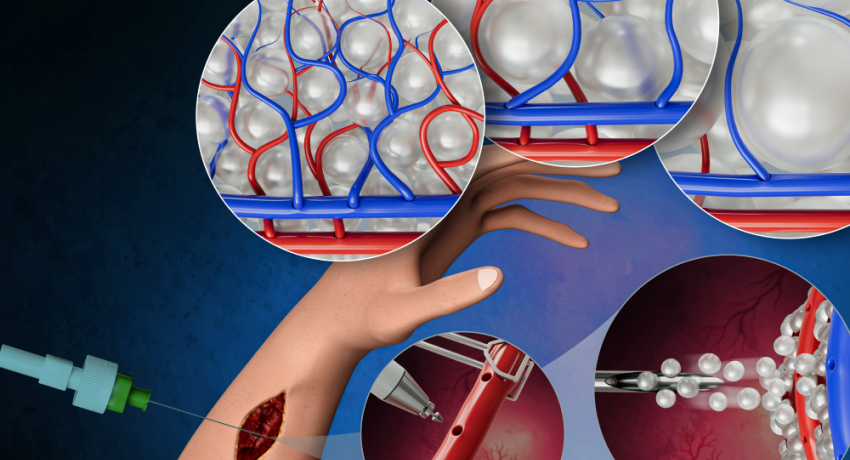
For soft tissue to recover and regrow, it needs blood vessels to grow to deliver oxygen and nutrients. Sluggish vascularization, however, can slow or even prevent recovery and regrowth of lost or damaged soft tissue after a severe injury or serious illness such as cancer. To speed up the formation and patterning of new blood vessels, Penn State researchers have combined a novel biomaterial with a microsurgical approach used in reconstructive surgery, enabling improved recovery of soft tissue.