Modified soft material promises better bioelectronics, researchers say

Enrique Gomez photo

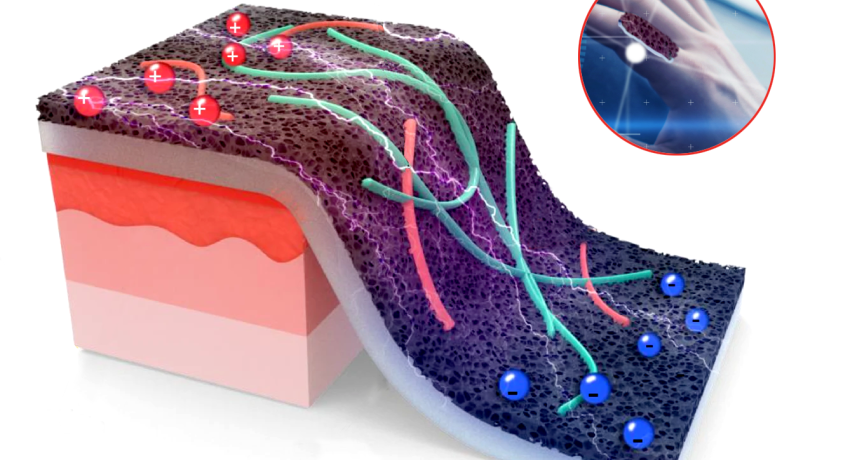
Soft bioelectronic devices hold potential for many advances in the health care field, but researchers have faced hurdles in identifying materials that are biocompatible while still maintaining all necessary characteristics to operate effectively. A team co-led by Penn State researchers has now taken a step toward achieving such a material, modifying an existing biocompatible material to conduct electricity efficiently in wet environments, as well as send and detect ionic currents within biological media.

Their results were published in the journal Matter.

Optical invention mirrors the image processing power of a human eye

Optical invention - metasurface image

By Maria R. Lucas

On a cold, sunny day, you’re driving on a rural road, surrounded by snow-covered fields. In an instant, your eyes process the scene, picking out individual objects to focus on — a stop sign, a barn — while the rest of the scene blurs in the periphery. Your brain stores the focused and blurred images as a memory that can be pictured in your mind later, while sitting at your desk.  

Stuckeman architecture professor awarded United States Artists Fellowship

DK Ossea-Asare, associate prof of architecture

A Penn State architecture and engineering design professor whose work explores the reuse and recycling of materials to create low-carbon structures has been selected as a recipient of the national 2024 United States Artists (USA) Fellowship.

DK Osseo-Asare, associate professor of architecture in the College of Arts and Architecture’s Stuckeman School and of engineering design in the College of Engineering at Penn State, earned one of five USA Fellowships in the Architecture and Design category.