Researchers uncover mechanisms to easily dry, redisperse cellulose nanocrystals

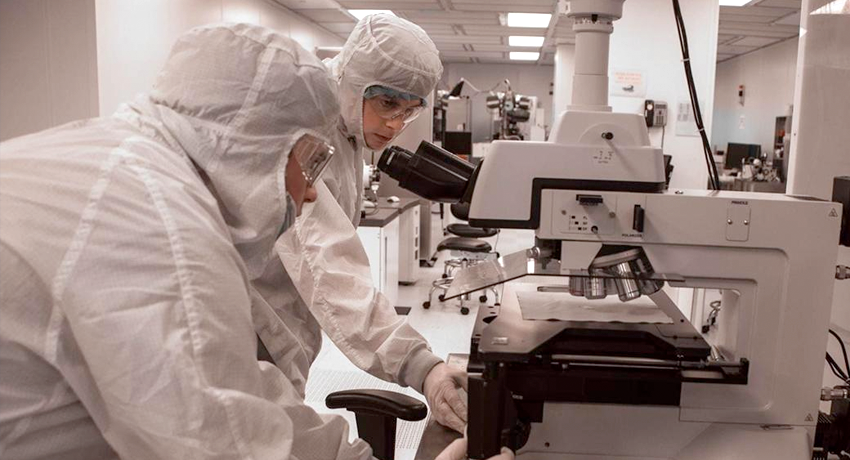
Man and two women in a lab readying a sample of cellulose

By Maria R. Lucas

UNIVERSITY PARK, Pa. — Cellulose nanocrystals — bio-based nanomaterials derived from natural resources such as plant cellulose — are valuable for their use in water treatment, packaging, tissue engineering, electronics, antibacterial coatings and much more. Though the materials provide a sustainable alternative to non-bio-based materials, transporting them in liquid taxes industrial infrastructures and leads to environmental impacts.

Linxiao Zhu

Linxiao Zhu

Assistant Professor of Mechanical Engineering

(e) lqz5242@psu.edu
(o) 814-865-2519
143 EEL Building

https://sites.psu.edu/lzhu/
Ayusman Sen

Ayusman Sen

Verne M. Willaman Professor of Chemistry, Professor of Chemical Engineering

(e) axs20@psu.edu
(o) 814-863-2460
440 Chemistry Building

https://sites.psu.edu/sengroup/
Suzanne Mohney

Suzanne Mohney

Professor of Materials Science and Engineering, and Electrical Engineering

(e) sem2@psu.edu, (e) mohney@ems.psu.edu
(o) 814-863-0744
N-209 Millennium Science Complex

Scott Medina

Scott Medina

Associate Professor of Biomedical Engineering
Director - Center for Biodevices, Korb Early Career Professor, Huck Chair in Nano Bioengineering

(e) shm126@.psu.edu
(o) 814-863-4758
511 Chemical and Biomedical Engineering Building

https://sites.psu.edu/medinalabgroup/
Daniel Lopez

Daniel Lopez

Director of the Nanofabrication Lab
Liang Professor of Electrical Engineering and Computer Science

(e) ovl5064@psu.edu
(o) 814-867-1575
N-321 Millennium Science Complex