Atom-scale stencil patterns help nanoparticles take new shapes, learn new tricks

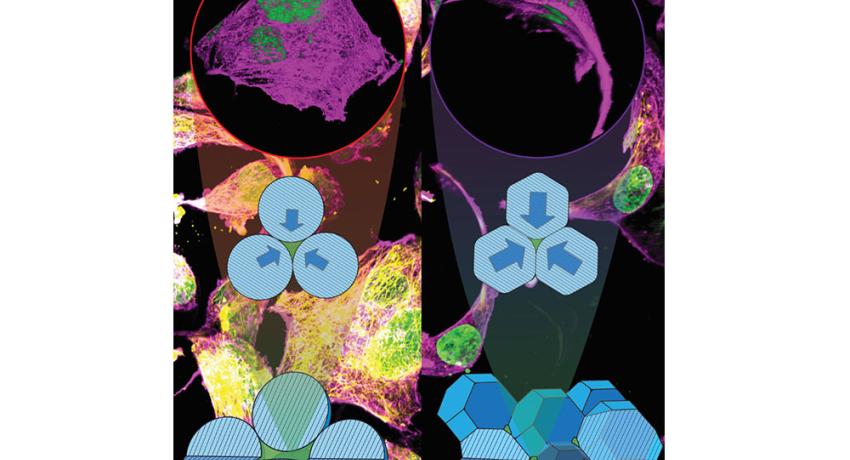
UNIVERSITY PARK, Pa. — Inspired by an artist’s stencils, researchers have developed atomic-level precision patterning on nanoparticle surfaces, allowing them to “paint” gold nanoparticles with polymers, or long chains of small molecules, to give them an array of new shapes and functions. The “patchy nanoparticles” developed by a multi-institutional team that includes researchers at Penn State can be made in large batches, used for a variety of electronic, optical or biomedical applications, or used as building blocks for new complex materials and metamaterials.   

Penn State alum helps others find new careers through nanotechnology

Man posing in a building

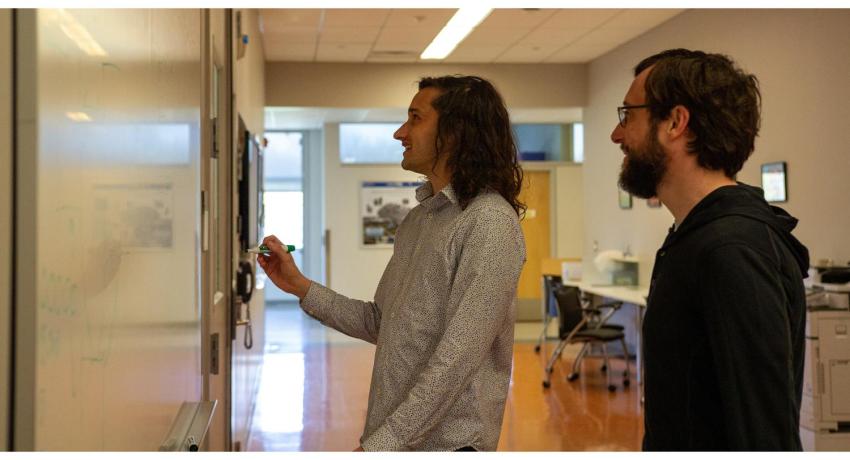
UNIVERSITY PARK, Pa. – As the managing director for Penn State's Center for Nanotechnology Education and Utilization (CNEU), Zachary Gray spends a lot of his summer in the classroom. He works to teach veterans and students how to work at microscopic scales as part of a 12-week course — the same one that shifted his career path almost two decades ago. 

Shining a light on molecules: L-shaped metamaterials can control light direction

Scientific image taken by a microscope

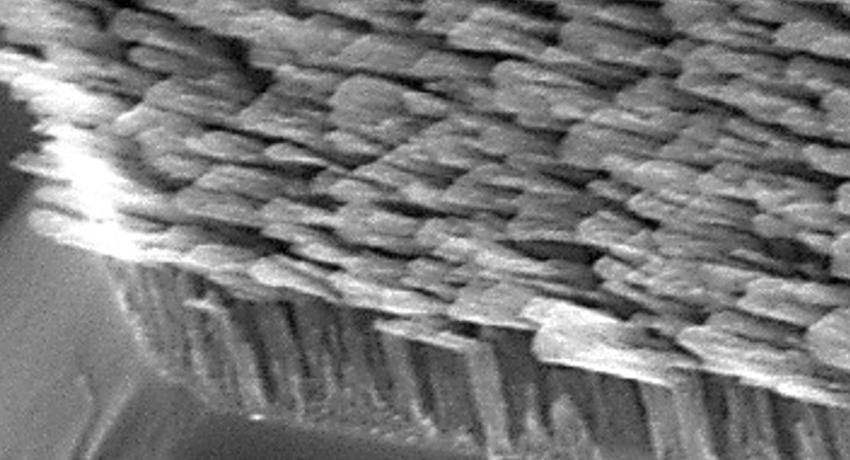
Polarized light waves spin clockwise or counterclockwise as they travel, with one direction behaving differently than the other as it interacts with molecules. This directionality, called chirality or handedness, could provide a way to identify and sort specific molecules for use in biomedicine applications, but researchers have had limited control over the direction of the waves — until now.

Method for producing sulfur compounds in cells shows promise for tissue repair

lab image showing a needle dropping a sample into a structure

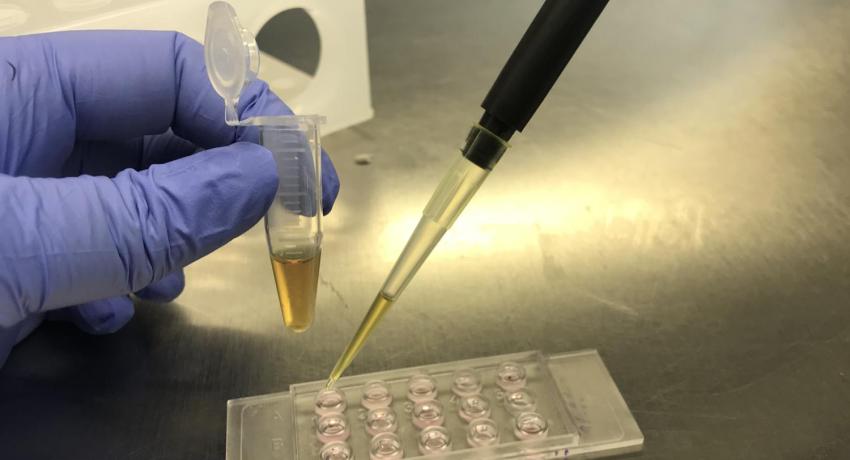
Sulfur-based compounds produced in our bodies help fight inflammation and create new blood vessels, among other responsibilities, but the compounds are delicate and break down easily, making them difficult to study. A team led by Penn State scientists have developed a new method to generate the compounds — called polysulfides — inside of cells, and the work could potentially lead to advances in wound treatment and tissue repair.

Dipanjan Pan

Dipanjan Pan

Dorothy Foehr Huck & J. Lloyd Huck Chair Professor in Nanomedicine
Professor of Materials Science and Engineering, Professor of Nuclear Engineering

205 Hallowell Building

Mauricio Terrones named head of the Department of Physics

Department Head of Physics

By Sam Sholtis

Mauricio Terrones, Evan Pugh University Professor and Verne M. Willaman Professor of Physics, and professor of chemistry and of material science and engineering, has been named the new George A. and Margaret M. Downsbrough Head of the Department of Physics at Penn State, effective July 1. Terrones succeeds Nitin Samarth, who has served as head of the department since 2011.