Transparent ceramic could boost internet speeds and cut energy use

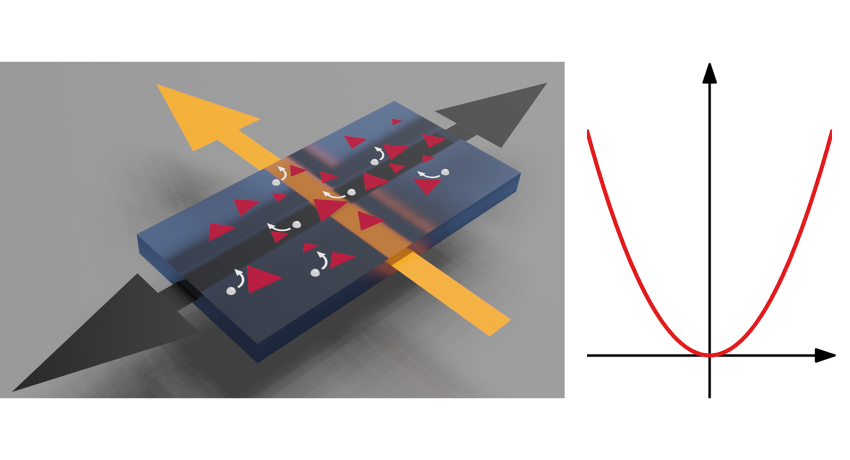
A new class of ceramics are not only transparent, but they can control light with exceptional efficiency — better than any theories predicted. Now, an advanced theory put forth by researcher at Penn State may explain why this material is so good at light control, which could lead to large-scale manufacturing of these materials for faster, smaller and more energy efficient technologies used in high-speed communications, medical imaging and advanced sensing.

Abington professor receives DOE grant to engineer advanced quantum materials

woman posing in front of Penn State background

Burcu Ozden, assistant professor of engineering and physics at Penn State Abington, received a three-year, $800,000 research grant from the U.S. Department of Energy to develop advanced two-dimensional materials for use in quantum technologies. The project, set to begin in 2026, will be conducted in collaboration with faculty, undergraduates and graduate students at Abington and University Park.

Penn State launches quantum theory center

Man smiling in a garden

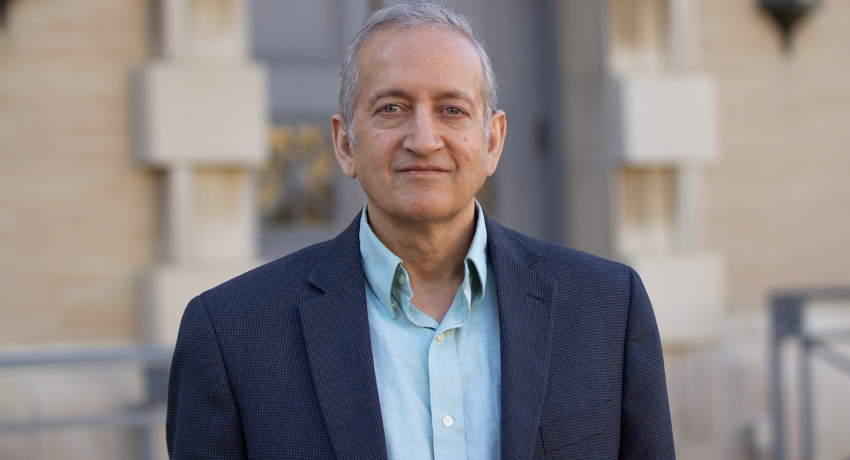
Penn State has launched a new center dedicated to quantum science and germinating cross-disciplinary collaboration. The Center for Theory of Emergent Quantum Matter (C-TEQ) aims to unite researchers across colleges, institutes and departments, catalyze transformative discoveries and enhance the University’s global visibility in quantum science, according to Jainendra K. Jain, Evan Pugh University Professor, Erwin W. Müller Professor of Physics and Eberly Chair in Physics.

Old-school material could power quantum computing, cut data center energy use

UNIVERSITY PARK, Pa. — A new twist on a classic material could advance quantum computing and make modern data centers more energy efficient, according to a team led by researchers at Penn State.   

Barium titanate, first discovered in 1941, is known for its powerful electro-optic properties in bulk, or three-dimensional, crystals. Electro-optic materials like barium titanate act as bridges between electricity and light, converting signals carried by electrons into signals carried by photons, or particles of light.  

Jainendra Jain named 2025 Wolf Prize laureate in physics

Jainendra K. Jain, Evan Pugh University Professor and Erwin W. Müller Professor of Physics and holder of the Eberly Family Chair in the Penn State Eberly College of Science, has been awarded, along with two others, the 2025 Wolf Prize in Physics for “groundbreaking contributions to quantum matter and its topological potential” that revolutionized “our understanding of two-dimensional electron systems in strong magnetic fields.”

Room temperature electrical control could heat up future technology development

Illustration of device

By Ashley WennersHerron

An old physical phenomenon, known as the Hall effect, has revealed some new tricks, according to a team co-led by researchers at Penn State and the Massachusetts Institute of Technology (MIT). They reported their findings, which they said have potential implications for understanding fundamental physics of quantum materials and developing applied technologies such as quantum communication and harvesting energy via radio frequencies, this week (Oct. 21) in Nature Materials.

Growing tomorrow’s semiconductor chips in the materials garden

terrones holds a sampl

In some ways, Mauricio Terrones is a gardener. An Evan Pugh University Professor and The Penn State Verne M. Willaman Professor of Physics, Terrones does not grow flowers or vegetables, but instead, one- or few-atom-thick two-dimensional (2D) materials. Specifically, creating materials with specific properties. The first 2D material ever created was graphene, and Terrones was a pioneer in developing 2D materials beyond graphene such as molybdenum disulfide (MoS2) and Tungsten disulfide (WS2). These are layered 2D materials, monolayered, bi-layered, tri-layered or more.

Timothy Brick

Timothy Brick

Associate Professor of Human Development and Family Studies ICDS Faculty Co-Hire

(e) tbrick@psu.edu
(o) 814 865 4868
231 Health and Human Development Building

http://timbrick.net/
Jun Zhu

Jun Zhu

Professor of Physics

(e) jxz26@psu.edu
(o) 814-865-4376
321 Davey Laboratory

https://sites.google.com/view/junzhulab/home