Making rechargeable batteries more sustainable with fully recyclable components
By Mariah Lucas
Rechargeable solid-state lithium batteries are an emerging technology that could someday power cell phones and laptops for days with a single charge. Offering significantly enhanced energy density, they are a safer alternative to the flammable lithium-ion batteries currently used in consumer electronics — but they are not environmentally friendly. Current recycling methods focus on the limited recovery of metals contained within the cathodes, while everything else goes to waste.
Nichole Wonderling awarded prestigious fellowship
By Jamie Oberdick
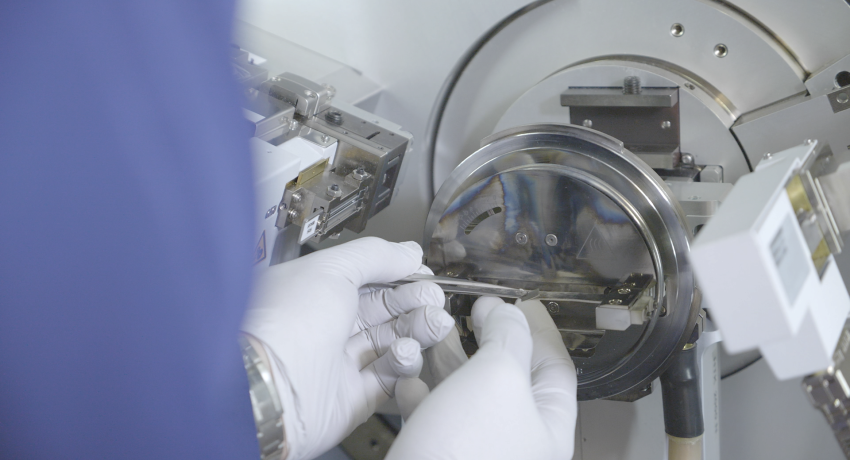
Nichole Wonderling, assistant research professor and X-ray scattering manager at the Materials Research Institute’s (MRI) Materials Characterization Lab (MCL), has been named a fellow by the International Centre for Diffraction Data (ICDD). The fellowship recognizes exceptional contributions to the field of materials characterization and dedicated service to the ICDD community.
Biodegradable electronics may advance with ability to control dissolve rate
By Mariah Lucas
Biodegradable electronics allow for medical devices — such as drug delivery systems, pacemakers or neural implants — to safely degrade into materials that are absorbed by the body after they are no longer needed. But if the water-soluble devices degrade too quickly, they cannot accomplish their purpose. Now, researchers have developed the ability to control the dissolve rate of these biodegradable electronics by experimenting with dissolvable elements, like inorganic fillers and polymers, that encapsulate the device.