Shedding light on materials in the physical, biological sciences

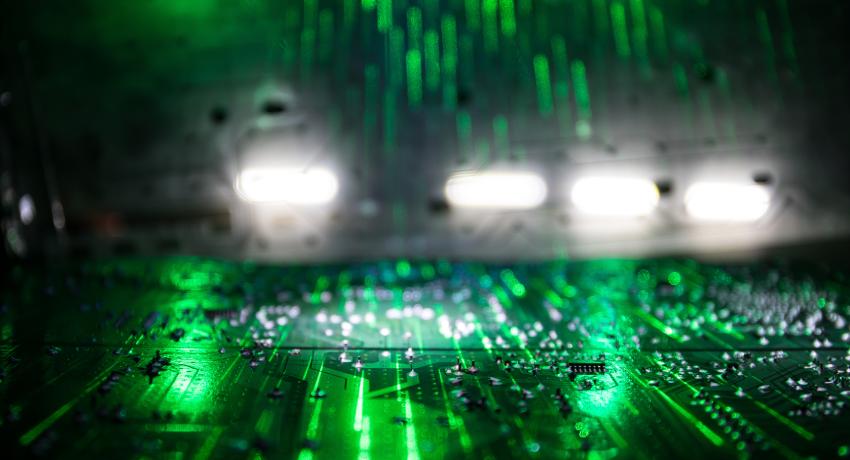
Materials scientists can learn a lot about a sample material by shooting lasers at it. With nonlinear optical microscopy — a specialized imaging technique that looks for a change in the color of intense laser light — researchers can collect data on how the light interacts with the sample and, through time-consuming and sometimes expensive analyses, characterize the material’s structure and other properties. Now, researchers at Penn State have developed a computational framework that can interpret the nonlinear optical microscopy images to characterize the material in microscopic detail.
‘Surprising’ hidden activity of semiconductor material spotted by researchers

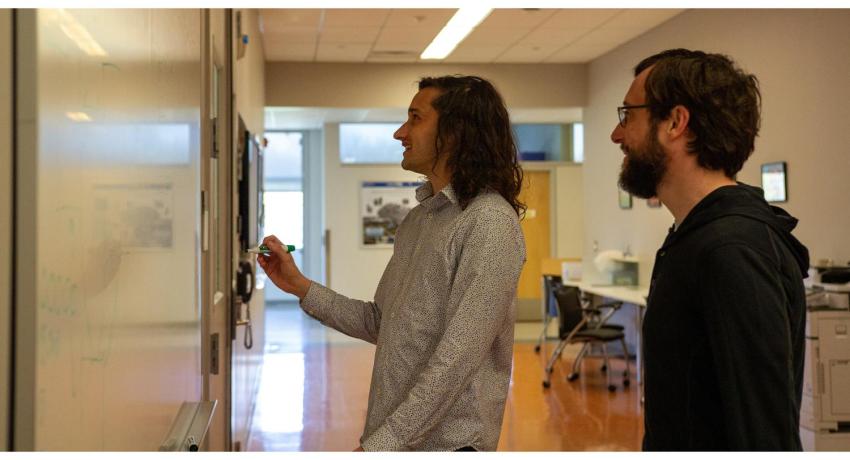
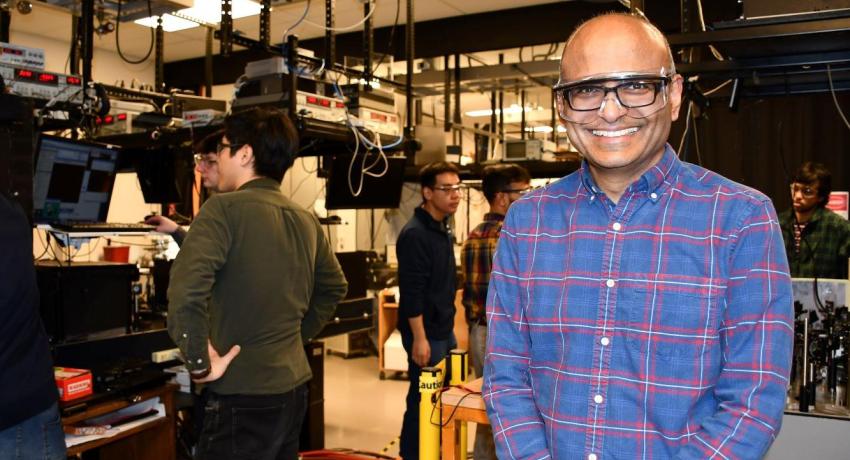
Prof. Gopalan in lab with students

By Jamie Oberdick

New research suggests that materials commonly overlooked in computer chip design actually play an important role in information processing, a discovery which could lead to faster and more efficient electronics. Using advanced imaging techniques, an international team led by Penn State researchers found that the material that a semiconductor chip device is built on, called the substrate, responds to changes in electricity much like the semiconductor on top of it.

Optical invention mirrors the image processing power of a human eye

Optical invention - metasurface image

By Maria R. Lucas

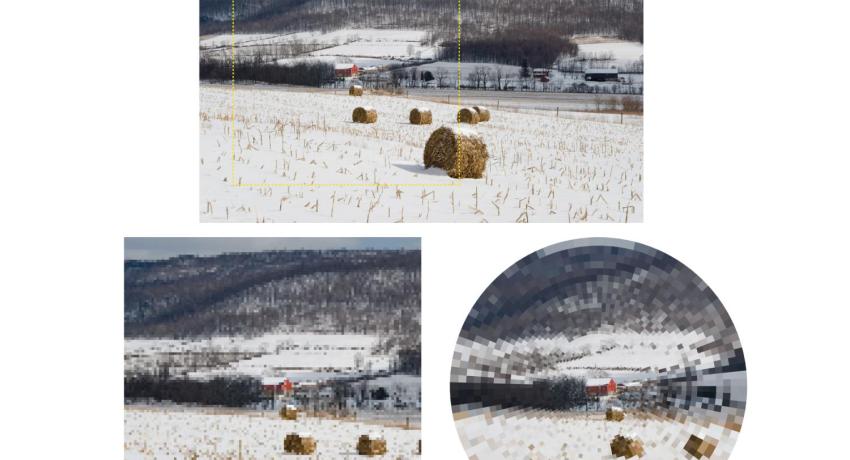
On a cold, sunny day, you’re driving on a rural road, surrounded by snow-covered fields. In an instant, your eyes process the scene, picking out individual objects to focus on — a stop sign, a barn — while the rest of the scene blurs in the periphery. Your brain stores the focused and blurred images as a memory that can be pictured in your mind later, while sitting at your desk.  

Sawyer Campbell

Sawyer Campbell

Associate Research Professor

(e) sdc22@psu.edu
(o) 814-865-2212
327 Electrical Engineering East

90 Pollock Road

Tak Sing Wong

Tak Sing Wong

Professor of Mechanical Engineering Wormley Early Career Professor

(e) tuw17@psu.edu, (e) tswong@psu.edu
(o) 814-865-6122
N-330 Millennium Science Complex

https://sites.psu.edu/wong/
Randy McEntaffer

Randy McEntaffer

Department Head of Astronomy & Astrophysics and Professor of Astronomy & Astrophysics

(e) rlm90@psu.edu
(o) 814-863-6091
526 Davey Lab

https://www.mcentaffergroup.psu.edu/
John Asbury

John Asbury

Professor of Chemistry

(e) jba11@psu.edu, (e) jasbury@psu.edu
(o) 814-863-6309
112 Chemistry Building

https://sites.psu.edu/asburylabpsu/