User Research Facilities

MRI coordinates, administers, and supports several state-of-the-art characterization, fabrication and research facilities at Penn State that are available to the academic and non-academic research communities. These user research facilities are staffed with full-time technical personnel who maintain the equipment and train researchers to use the instrumentation and tools themselves or assist researchers with their characterization and fabrication needs.

Materials Characterization Laboratory

materials characterization of hydroxy apetite

Capabilities

  • x-ray scattering
  • molecular spectroscopy
  • surface metrology
  • electron microscopy
  • electrical characterization
  • electron spectroscopy
  • particle analysis
  • thermal analysis
Visit the MCL Website | Learn more about the MCL

Nanofabrication Laboratory

researchers working in the Nanofabrication Laboratory

Capabilities

  • lithography
  • thin film disposition
  • etching
  • thermal processing
  • wet chemical cleaning and etching
  • characterization
  • chemical nanofabrication & characterization
Visit the Nanofab Website | Learn more about the Nanofab

Smart Materials Integration Laboratory

sputtering tool in the clean room

Capabilities

  • vision for device integration
  • integrated devices
  • smart materials for integrated optics
  • applications of integrated piezoelectric devices
Visit the SMIL Website | Learn more about SMIL

Materials Simulation Center

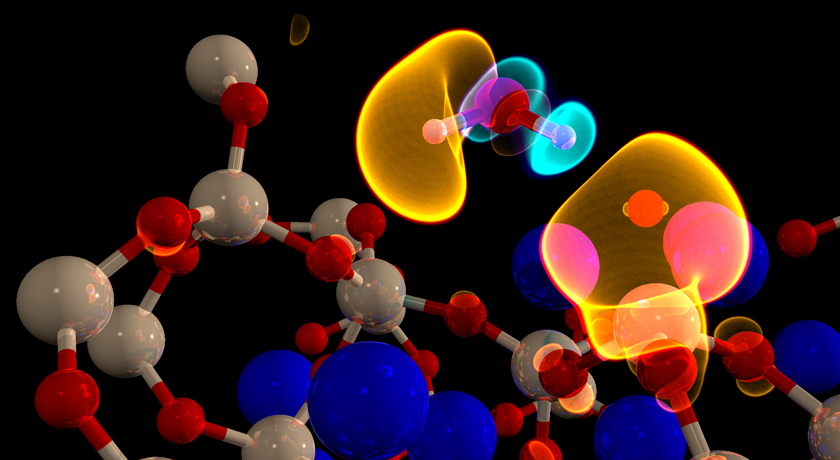
materials visualization of a graphene lattice

Capabilities

  • atomistic simulation software (from ab-initio to united-atom methods)
  • users groups
  • workshops
  • materials simulation lectures
  • access to state of the art computational facilities
Visit the MSC Website | Learn more about the MSC

MRI User Research Facilities


Materials Characterization Laboratory (MCL)

The Materials Characterization Lab (MCL) is a fully-staffed user research facility at Penn State's Materials Research Institute that offers researchers convenient and affordable access to more than 70 advanced analytical instruments and a wide range of services.

MCL's highly trained technical staff is available to help researchers identify and understand the properties of novel materials. Both academic and non-academic users learn through analyzing their own samples under the guidance of the technical staff members and/or by participating in short courses and seminars offered throughout the year. Offsite users are welcome to travel to the facility to perform their own analyses or work remotely in close concert with the technical staff members to achieve their analytical objectives.

Website: http://www.mri.psu.edu/facilities/mcl/


Nanofabrication Laboratory (Nanofab)

The Nanofabrication Laboratory is a fully-staffed user research facility at Penn State's Material Research Institute that enables fabrication and characterization of a wide range of devices to support fundamental and applied research in diverse fields spanning electronics to medicine.

The Nanofab provides faculty, students, and industry researchers the opportunity to perform hands-on research with some of the world's most sophisticated instruments for micro-and nano-fabrication. The expert technical staff provides extensive support and training or will perform research on your behalf.

The Nanofabrication Laboratory is a member of the National Nanotechnology Infrastructure Network (NNIN). Supported by the National Science Foundation, NNIN is an integrated partnership of fourteen user facilities, providing unparalleled opportunities for nanoscience and nanotechnology research.

Website: http://www.mri.psu.edu/facilities/nanofab/


Smart Materials Integration Lab (Part of the Nanofab)

The Smart Materials Integration Laboratory (SMIL) is designed to allow Penn State University scientists to create a new generation of smart integrated components that combine electrical, mechanical, and optical functions. "Smart" materials sense a change in the environment and respond to that change in a useful way. The laboratory enables the integration and miniaturization of "smart" materials and the fabrication of components that go beyond conventional semiconductor-based materials. This is done by utilizing both semiconductor and low temperature co-fire ceramic technologies. SMIL is part of the Penn State Nanofabrication Laboratory.

Website: http://www.mri.psu.edu/facilities/smil/


Materials Simulation Center

The Materials Simulation Center is a facility for education and research on materials simulation. It is designed to function as a hub to connect experimental and simulation activities through the organization of collaborative projects, short courses, and workshops. For the experimentalist, the Center will provide the information needed to add a simulation component to their work. For groups already working on materials simulation, the Center will be a natural environment for interaction and extension of existing simulation techniques.

Website: http://www.msc.psu.edu/